| |
|
| |
Tourist orientation
Activities and global information about the surroundings of our hostel.
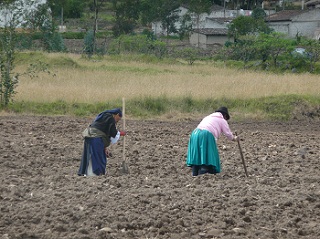
In Peguche, where hostel Aya Huma is located, the locale inhabitants mostly work in farming, weaving and music. De musicians from Peguche often travel de world. The man, with their long braids. White trousers and bleu ponchos they are easy to recognize. The women wear embroided blouses, long blue skirts and typical gold colored chains around their necks. A weaver, a musical workplace and the Peguche waterfall are on walking distance from the hostel.
Excursions
The beautiful nature surrounding the hostel is perfect for hikes, bike and horseback riding tours to different ceremonial places, villages, lakes and volcanoes. Hiking maps are available at the reception desk. We also love to help you plan excursions with or without a guide or private transportation. Please contact us if you are interested
|
 |
The Peguche waterfall, located in the eucalyptus forest and within 20 walking minutes from our hostel, is definitely worth a visit. The waterfall is 18 meters high and gets its water from a river which originated from the San Pablo lake. The waterfall is a very important spiritual place for the Indian inhabitants of Peguche and surroundings. During the yearly hosted Sun Ceremony “Inti Raymi” held around June 22ste, people take a ritual cleansing bath around midnight. |
 |
Holy tree “El Lechero” is a tree of more than 300 years old. The tree is located on the hill “Pucará de Rey Loma”, exactly in between Peguche and the San Pablo lake. From this point you will have an incredible view of the lake. The Indian inhabitants use this place to have the “Wakcha Karay” ritual. This ritual is addressed to the “Taita Imbabura” volcano. During this ritual they ask the volcano to give them a good sow, harvest and a healthy life.
“El Lechero” has several legends including:
A young Indian couple in love was not allowed to see each other due to their families. Disappointed they took off together. With the help of the gods the boy transformed himself into a tree “el Lechero” on top of a hill. The girl cried full of grief until she and her tears were transformed into a lake, now called the San Pablo lake. This way, they are inseparable.
|
 |
Parque Condor
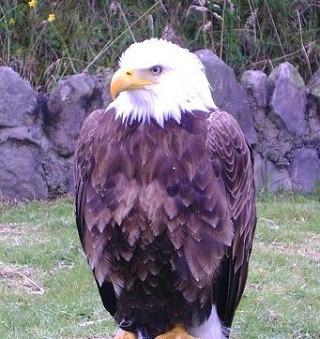
Open: 9:30 - 17:00 from Wensday to Sunday and holidays Located approximately 3 km from our hostal Aya Huma and 1 km. of the sacred tree "El Lechero" on a hill between Peguche and Lake San Pablo, on foot in about one hour and half from our hostel. (We have hiking maps available) It is a sanctuary for birds of prey to protect endangered, founded by Joep Hendriks. The main objective of the park is to provide information to local populations, especially children who are learning how to live with nature, with respect and love for the birds.
From the Condor Park is a beautiful view of the Valley and the San Pablo lake.
Two times a day will find an extraordinary spectacle where exotic eagles make their flight around the mountain and the lake.
Flight Exhibits 11:30 and 13:30 (Hours may change according to weather)
Entrance costs $ 4.50 for adults and $ 2.50 for children (2018)
info@parquecondor.org www.parquecondor.org
|
 |
Villages
Otavalo is located at 2,5 km from our hostel. One of the most popular attractions is the daily held indigenous market “Plaza de Ponchos” where market vendors from the surrounding villages sell handmade souveniers. On Saterdays Otavalo transformed into
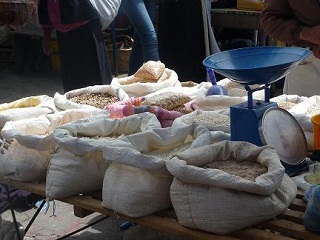
one large market. From 4 am until 10 am you can visit the animal market where cows, pigs, hores, llamas, guinea pigs, chickens, cats and many more animals are sold. After that you can visit the covered market “24 de Mayo” where locals buy their groceries or eat from one of the many food stalls. This part of the Otavalo market is definetly worth visiting as not a lot of tourists know about this. The market is surrounded by many colorfull fruit and vegetable stalls.
|
 |
Cotacachi is located at 8 km from hostel Aya Huma and is famous for its leather products. Cotacachi is also known for its “Carne colorada”, meat which has been colored red with “achote” an plant from the tropical part of Ecuador. Definitely worth a try. |
|
San Antonio de Ibarra is located 14 km north of our hostel, this town is dedicated to the wood cutting craft. Most wood cutters have shops/galleries at their homes which are both visited by national and international tourists.
Ibarra is located 20 km north of Peguche and has 153.622 inhabitants. It is also de capital of the Imbabura province. It is a lovely city with typical South American parks and churches. You can enjoy traditional ice cream in Ibarra calles “helados de paila” which is prepaired in a large bronze pan (paila). Other specialties of Ibarra are “Arrope de mora” (liquid blackberry jam), “Quimbolitos”(Sweet corn cake) and “Fritata” (fried pork wrapped in a achira leaf)
Although Ibarra is only 20 km from Peguche, it is noticeably warmer. Ibarra (2192 meter) and Peguche (2600) which makes all the difference in temperature.
Driving north for 40 minutes from Ibarra you will reach the Afro- area Chota where temperatures are truly tropical.
|
|
Lakes
The Imbabura province has over 20 beautiful lakes including:
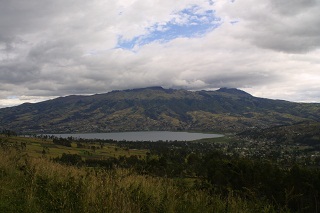
San Pablo lake, located on 2660 meter it is within walking distance from our hostel in just 2,5 km. The lake has a water surface of 583 square meters and is the source of the Peguche waterfall. The lake is surrounded by many different villages. De inhabitants live of farming and the production of cane mats used by the local inhabitant as mattresses. The cane is harvested all around the lake, dried at home en braided by hand into mats.
|
|
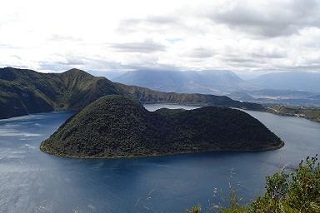
Cuicocha- crater lake is located on 3080 meter and 16 km from our hostel. Cuicocha is a part of national park Cotacachi-Cayapas and is located on the bottom f the Cotacachi volcano. The lake originated during an volcanic eruption about 3100 years ago. The name Cuicocha comes from the Quichua and means “guinea-pig lake”. Apparently there are to islands located in the lake which are shaped like a guinea-pig. The local inhabitants see the Cuicocha lake as the lake of the gods. During the solstice party in June the locals have ritual baths and ceremonies in the lake.
A extraordinary excursion to this highly located crater lake, with a of 3 km is a walk around the lake. During this hike you will have beautiful views of the lake and you can admire the beautiful flowers, including orchids. If you are in a bit of luck you will also see some Andean Condors and Eagles flying around. You can also take a boot ride onto the lake and witness some of the volcanoes activities by seeing gas bubbles coming up to the surface.
|
 |
Monjanda lakes are located 18 km from Peguche at an altitude of 3713 meters. Monjanda is an inactive volcano with three volcanic lakes which, together, form the largest body of water in the area. You can walk around one of the lakes and enjoy the beautiful flora and fauna including the polylepsis tree (paper tree), the authentic plant “Chuquiragua” and the Condor (the largest bird of prey in the Andean highlands with a span of three meters). If the skies are clear you will have a beautiful view of the volcanoes Fuya Fuya, Imbabura, Cayambe, Cotacachi and Cerro Negro (Colombia). |
 |
Yahuarcocha lake is located 25 km north of Peguche at an altitude of 1700 meters. Literally means “blood lake”. The lake got its name due to the bloody struggle between the Incas and the Caranquis (inhabitants of this area) who would throw the dead Inca’s into the lake. Today the Yahuarcocha lake is a lovely place to sail, hike, take a picnic or eat Tilapia (sweet water fish). The local inhabitants like to visit the lake on weekends and holidays. It is also know for the international car-race that is held here every September.
|
|
Volcanoes:
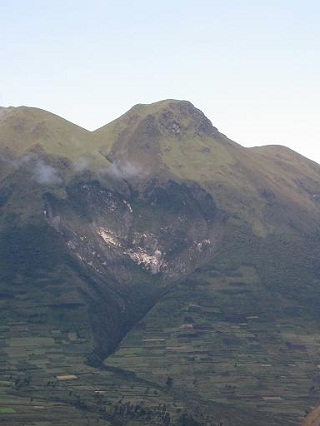
Imbabura, an extinct volcano which is peaks at 4609 meters and hasn’t erupted in 14.000 years. Imbabura has a highly spiritual meaning for the local inhabitants. It is known as “Taita Imbabura” which means “Father Imbabura” and is seen as the protector of the region.
On the western slope of the volcano you will see a clearly noticeable heart shape, the legend tells us this is the result of the rocks that the female volcano “Mama Cotacachi” threw at Imbabura to show him her feelings of affection. For mountaineers the volcano is relatively easy to clime al the way to the top.
|
 |
|
Cotacachi, an extinct volcano which peaks at 4937 meters. It is located 16 km from Peguche and is part of the Cotacachi-Cayapas ecological reservation. For the Indian population this volcano is a woman with the name María Isabel Nieves Cotacachi. There are many legends who tell the story of the love between Mama Cotacachi and Taita Imbabura. The Cotacachi exist mainly of rocks and its covert in internal snow. It is however possible to clime the Cotacachi all the way to the top. You will need some technical climbing experience. When you reach the top you will be able to enjoy the fantastic views of the following volcanoes: Chiles (Colombia) Imbabura, Cayambe, Fuya Fuya, Pichincha, Cotopaxi and the Antisana. It is important to keep an eye out for weather changes and it is recommended to clime Cotacachi with an experienced guide.
|
|
Fuya Fuya (4290 meters) is the highest mountain in the Mojanda region. You will be able to clime the volcano in 4 hours. You will start at the grand lake, Laguna grande, the largest of the three volcanic lakes. Technically this clime is easy and a good preparation for the higher volcanoes as Cayambe, Cotopaxi and Chimborazo. Fuya Fuya is located exactly at the border of the provinces Pichincha and Imbabura.
|
|
Cayambe which peaks at 5790 meters is the ranked third in Ecuador’s highest volcanoes. It is the only active volcano, with eternal snow which is located directly on the equator. The city Cayambe got his name because of the volcano. To reach the top you will need to be in good shape, have climbing experience and bring a local guide. Cayamba is located in the Pichincha province. From our hostel it is a two hour drive (4x4) to get to the mountain refuge. |
|
|


 AGENDA



